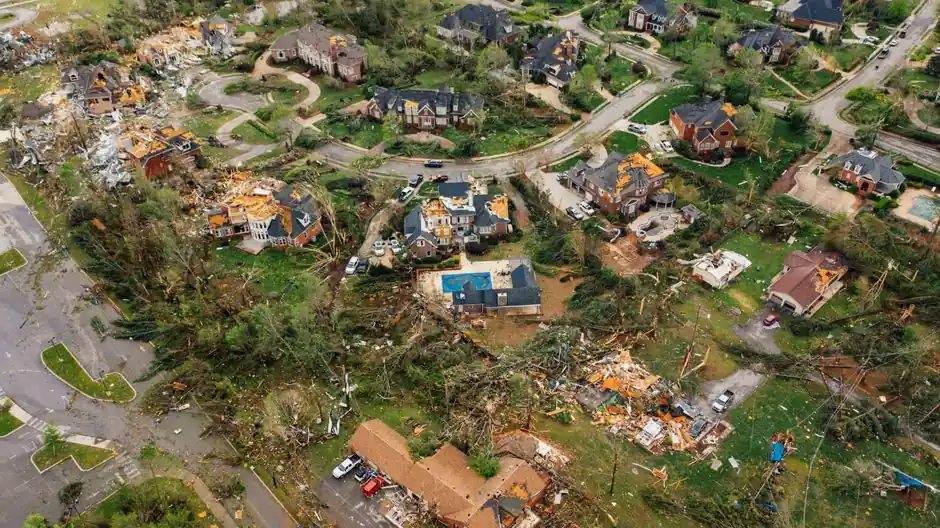
Emergency Tarp-Over
We secure open decking with a tarp and battens within 24 hours in most Texas metros. That stops water intrusion, protects your ceilings, and preserves the damage for the adjuster to see before anything gets repaired.
Every storm repair starts with a full inspection and documentation package, then moves into the actual repair work. Here is what is covered on a standard job, and what we quote separately if your roof needs it.
We secure open decking with a tarp and battens within 24 hours in most Texas metros. That stops water intrusion, protects your ceilings, and preserves the damage for the adjuster to see before anything gets repaired.
A HAAG Certified inspector walks every slope and checks flashing, ridge vents, pipe boots, and valleys. We run a moisture meter and infrared camera inside to find water that has already traveled past the ceiling line.
You get slope-by-slope photos, measurements, and a line-item scope built for a Texas storm damage roof insurance claim. If the first offer misses decking or flashing, we re-document the disputed areas with the adjuster.
We replace missing and wind-lifted shingles, reset or replace flashing, and reseal penetrations with new sealant and boots. Materials match the existing profile wherever the shingle line is still available.
Soft or delaminated sheathing gets cut out and replaced, then new underlayment goes down before shingles. We match the underlayment spec to your jurisdiction so the repair passes a re-roof inspection.
Before we close out, we water-test the repaired areas and check the ceiling line inside. If anything weeps, we open it back up and fix it on the spot, not on a callback.
Storm Damage Roof Repair in Texas is the emergency and permanent restoration of a roof after hail, wind, or water has compromised it. That covers tarp-overs on open decking, replacing missing shingles and torn ridge caps, resetting flashing around chimneys and vents, and sealing penetrations where a roofing nail or pipe boot has failed. We use a moisture meter and an infrared camera to find water that has already traveled into the deck and insulation, because a leak you can see is rarely the only one you have.
Texas storm damage roof repair gets busy after every spring hail core and every Gulf hurricane feeder band. In the 2026 season alone, we ran tarp crews through Hutto, Forney, and Katy within 24 hours of the same squall line. If you are searching for storm damage roof repair services in Texas near me after a storm, the first thing we do is document the damage before anything gets moved, patched, or hauled off.
Five steps from the first call to the final walk. You always know what is happening on your roof and what happens next.
Schedule
Call or book online — a real human picks up and confirms a 2-hour arrival window.
Diagnose
Licensed tech inspects on-site, then walks you through the cause and your options.
Fix
The job is completed to code and done right the first time — no shortcuts, no surprises.
Guarantee
Every job backed by a written workmanship warranty — and we stand behind it.
 Tools & Equipment
Moisture meter
Reads water content in decking and insulation so we find hidden intrusion instead of guessing from a ceiling stain.
Infrared camera
Maps wet zones across the ceiling line and attic, showing where water has traveled beyond the visible leak.
Roofing nail gun
Sets fasteners at the correct depth and pattern for the shingle spec, which keeps wind-uplift ratings intact.
Pry bar and shingle cutter
Lifts and trims damaged shingles cleanly so the repair blends into the existing field without tearing good material.
Chalk line
Keeps replacement courses straight and aligned with the existing shingle lines so the repair is not visible from the street.
Safety harness and roofing ladder
OSHA-compliant fall protection and stable roof access on steep Texas pitches and two-story homes.
Tarp
Secures open decking after a storm and keeps water out until the permanent repair is scheduled and materials are on site.
HAAG Certified inspection
Every storm claim starts with a HAAG Certified inspector documenting damage slope by slope. The report is written the way an adjuster reads it, with photos and measurements tied to specific areas of the roof.
Moisture mapping
We combine a moisture meter with an infrared camera to map wet decking and insulation. That tells us whether a repair is enough or whether sheathing needs to come out before new underlayment goes down.
Code-correct flashing and fastening
Repairs are built to current wind-uplift and flashing code, not the code the roof was originally built under. We match underlayment, membrane, and fastener patterns so the work passes a re-roof inspection.
Water testing
Before we close out any repair, we water-test the area and check the ceiling line inside. If it weeps, we open it back up and fix it on the spot rather than scheduling a callback.
01
What we do: We inspect every slope for bruising and impact marks, measure the damage, and document it for your claim. If the damage is concentrated on a few slopes, we repair those and leave the rest documented.
→ You get a provable damage report and a repair that restores the roof without paying for slopes that were not hit.
02
What we do: We tarp the breach within 24 hours, then trace the water with a moisture meter to find every entry point, not just the obvious one. Repair follows once the roof is dry and the claim is documented.
→ Water stops spreading, your ceiling and insulation are protected, and the permanent repair matches the rest of the roof.
03
What we do: We open the soft area, replace any delaminated sheathing, reset the flashing, and reseal the valley. Then we water-test and give you photos of what was actually under the shingles.
→ You know exactly what condition the roof is in and what was repaired, which matters at resale and at the next renewal.
04
What we do: We inspect the membrane, drains, and flashing, repair the torn seams, and verify drainage so water does not sit on the repair. TPO and EPDM repairs are matched to the existing system.
→ The ponding is corrected, the seams hold, and the roof is ready for the next round of weather.
Texas storm damage roof repair is a different job depending on where you live. Gulf Coast homes from Bay City to Webster take hurricane feeder bands and salt air that corrode flashing and fasteners, so we spec corrosion-resistant materials and check every penetration. North and Central Texas gets the hail cores, which means impact bruising on shingles and vents that does not always leak right away. We work to current wind-uplift code and Texas Department of Insurance documentation expectations, and we stage crews out of Houston, Dallas, Austin, and San Antonio so a squall line that hits Killeen and Waco the same night gets two crews. If you need emergency storm damage roof repair in Texas after a hurricane, we run tarp crews around the clock until every open roof is covered.
Katy
New-build subdivisions here have steep, complex rooflines that catch wind and hail on multiple slopes, so inspections take longer and documentation has to cover each plane.
Webster
Bay-adjacent homes see salt-air corrosion on flashing and fasteners, so repairs here get corrosion-resistant materials and extra attention at penetrations.
Georgetown
North-facing slopes here take the worst of the hail and stay shaded longer, which slows drying and makes hidden moisture more likely after a storm.
Forney
Fast-growing east Dallas subdivisions mean a lot of newer roofs hit by the same hail core, so we often run multiple crews through the area in one week.
Spring hail cores across North and Central Texas
Hail bruising fractures shingle mat and dents vents and flashing. Damage often does not leak immediately, so we document it before it turns into a ceiling repair.
Gulf hurricane feeder bands
Wind-driven rain and torn shingles hit the coast first. We stage tarp crews near the bay so open roofs get covered the same night, not the next week.
Summer heat and UV exposure
Heat ages shingles and sealant fast, so repairs made in summer get materials rated for high UV and fresh sealant at every penetration.
Freeze events and ice dams
Winter freezes can back water under shingles at the eaves. We check ice-and-water membrane coverage and repair any gap we find while we are on the roof.
Storm damage rarely stays where it starts. Water travels, decking softens, and a small breach becomes a ceiling repair and a mold job. Here is what we see most and how we stop it.
Problem
Exposed underlayment and decking take on water with the next rain, and the leak shows up as a ceiling stain far from the missing shingles.
Our Fix
We tarp the open area the same day, then replace the missing shingles and check the surrounding field for lifted tabs. Fasteners get matched to the existing pattern so the repair does not create a new wind catch.
Problem
Fractured shingle mat and exposed asphalt shorten roof life by years, and the damage is often invisible from the ground until granules start collecting in gutters.
Our Fix
A HAAG Certified inspection measures impact density per slope and photographs the bruising. We repair the worst slopes and document the rest so your claim reflects the full damage, not just the leaks.
Problem
Storm-driven rain gets behind lifted or torn flashing and runs down the chimney chase or vent pipe into the attic and wall cavities.
Our Fix
We reset or replace the flashing, install new boots on pipe penetrations, and seal with fresh roofing sealant. Then we water-test the area and check the attic side before closing it up.
Problem
Wet decking softens and delaminates, insulation loses R-value, and mold can start within days in a Texas attic.
Our Fix
A moisture meter and infrared camera map the wet zones. We cut out soft sheathing, replace it, and install new underlayment before shingles go back on, so the repair is structural, not cosmetic.
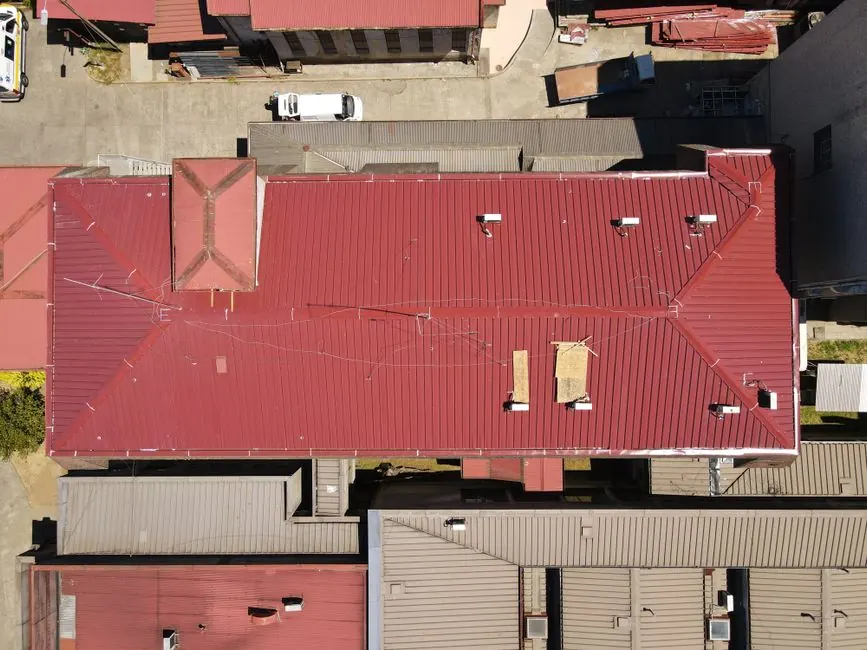
Storm damage does not wait for a convenient week. Our crews are set up to move fast, document properly, and leave a roof that passes inspection the first time.
Tarp-Over in 24 Hours
We roll a tarp crew to open decking within 24 hours of your call in most Texas metros. That stops the water, protects your ceilings, and buys time for the insurance adjuster to walk the roof before anything is disturbed.
HAAG Certified Inspections
Our inspectors are HAAG Certified, which means the damage report we hand you is written the way an adjuster reads it. Hail bruising, granule loss, and mat fracture get measured and photographed per slope, not summarized in a paragraph.
Insurance Claim Support
We help you file a Texas storm damage roof insurance claim with slope-by-slope photos, a moisture map, and a line-item scope. If the first offer misses decking or flashing, we meet the adjuster on the roof and re-document the disputed areas.
Warrantied Materials
We install GAF, Owens Corning, and CertainTeed systems with matching underlayment and ridge vents, so the manufacturer warranty stays intact. Workmanship is warrantied separately, and we register the material warranty for you before we leave.
Typical 2026 pricing for storm damage roof repair in Texas runs $450 to $2,800 for a localized repair, $350 to $900 for a tarp-over, and $9,500 to $24,000 for a full replacement depending on size and pitch. If the damage is covered, your out-of-pocket is the deductible. We give you the inspection findings and the numbers before anyone climbs back on your roof, and we tell you when a repair is the better call than a replacement.
Typical Investment Range
$450 - $2,800 for localized repairs; $9,500 - $24,000 for full replacement
You are paying for documentation that protects your claim, materials that keep the manufacturer warranty intact, and a repair that passes inspection the first time. A cheap patch that leaks next season costs more than doing it right once.
What changes the price
Roof size and pitch
A larger, steeper roof takes more labor, more material, and more safety setup. A two-story home with a complex roofline costs more to repair than a simple ranch, even for the same damage.
Extent of damage
A handful of missing shingles is a one-day repair. Bruising across multiple slopes usually means replacement, and wet decking adds tear-out and sheathing cost on top.
Decking condition
Soft or delaminated sheathing has to be cut out and replaced before new underlayment goes down. The more decking we replace, the higher the material and labor cost.
Material match
If your shingle profile is still in production, a repair blends in and costs less. Discontinued shingles may require replacing a larger area so the roof looks consistent.
Access and staging
Tight lots, steep driveways, and landscaping that needs protection add setup time. We include dumpster placement and protection in the quote so there are no surprises.
Emergency timing
After a major storm, tarp-overs and emergency calls carry a higher rate because crews are working around the clock. Scheduling the permanent repair after the rush usually costs less.
Google ★★★★★4.9
They tarped our roof the same night a storm took shingles off and came back with a full damage report. The claim was approved without a fight. Repair crew was clean and the yard was magnet-swept.
BBB ★★★★★4.8
Fair pricing and no pressure to replace when a repair was enough. They found the leak with a moisture meter and fixed the flashing, not just the shingles. No stain has come back.
Yelp ★★★★★4.9
We manage several properties and they handled tarp-overs on two buildings in one night after a hurricane band. Documentation was thorough and the restoration work passed inspection the first time.
Local Roofing Texas delivers storm damage roof restoration Texas-wide, with crews staged to reach both the Gulf Coast and North Texas after the same storm system. From military housing near Jbsa Ft Sam Houston to new subdivisions in Hutto and Forney, we run the same inspection, documentation, and repair process everywhere we work.
We handle storm damage roof repair for homes around the base, working around busy schedules and documenting damage for military families filing claims.
Killeen gets hail cores that bruise shingles across whole neighborhoods. We run multiple inspection crews here after a storm so claims get documented fast.
Central Texas hail and wind hit Waco roofs hard. We inspect every slope, document the damage, and repair or replace based on what the roof actually shows.
Pearland's newer subdivisions have complex rooflines that catch wind on multiple planes. We document each slope so nothing gets missed on the claim.
Shaded valleys and north slopes in Georgetown hold moisture after storms. We use moisture meters and infrared cameras to find water before it reaches the ceiling.
Spring sits in the path of Gulf feeder bands. We tarp open roofs fast and follow with permanent repairs built to current wind-uplift code.
Lake-area homes in Rockwall take wind-driven rain on the exposed sides. We check flashing and penetrations closely and reseal everything we open.
Coppell roofs see hail and high wind. We document damage slope by slope and match replacement shingles to the existing profile wherever possible.
Fast-growing Hutto means a lot of newer roofs hit by the same storm. We often run several crews through the area in one week after a hail event.
East Dallas storms reach Forney with hail and wind. We inspect, document, and repair, and we meet adjusters on the roof when a claim gets disputed.
Katy's steep, complex rooflines take hail on multiple slopes. Our HAAG Certified inspectors measure impact density per slope so the claim reflects the real damage.
Universal City homes near the San Antonio metro get hail and wind damage. We handle tarp-overs and permanent repairs with the same documentation standard.
Bay City roofs face hurricane bands and salt air. We spec corrosion-resistant flashing and fasteners and check every penetration after a storm.
Lockhart gets Central Texas hail and wind. We inspect every slope, document the damage, and repair or replace based on what the roof shows.
Bay-adjacent Webster roofs deal with salt-air corrosion and wind-driven rain. We repair membrane, flashing, and shingles and verify the work with a water test.
Real answers to the questions we hear most often from local homeowners and property managers.
When storm damage is widespread enough that patching no longer makes sense, a full installation with new underlayment and ridge vents is the better spend. We install GAF, Owens Corning, and CertainTeed systems built for Texas wind and hail exposure.
View Roof InstallationA roof with hail bruising on every slope usually gets replaced, not repaired. We tear off to the deck, replace damaged sheathing, and install a new system with a registered material warranty and a written workmanship warranty.
View Roof ReplacementLocalized damage, like a torn valley or a handful of missing shingles, gets a targeted repair. We match the existing shingle profile as closely as possible and seal every penetration we open so the fix does not create the next leak.
View Roof RepairStorm damage often shows up first as a ceiling stain, not a missing shingle. We trace the leak with a moisture meter and infrared camera, fix the actual entry point, and water-test the repair before we close it out.
View Roof Leak RepairA HAAG Certified inspection gives you a slope-by-slope damage report with photos and measurements. It is the document your insurance adjuster reads, and it is the first step on every storm claim we handle.
View Roof InspectionOpen decking after a storm gets a tarp within 24 hours in most Texas metros. That stops water from reaching your ceilings and insulation and protects the roof from further damage while the claim moves forward.
View Emergency Roofing ServicesCall (888) 842-0089 any hour for emergency tarping or to book a free inspection. Our office answers phones 24/7, and most non-emergency inspections are scheduled within 48 hours. You can also email [email protected] with photos of your roof and we will reply with a preliminary assessment.
Phone
(888) 842-0089Address
Texas
Hours
Mon–Fri: 7AM – 7PM
Sat: 8AM – 4PM
Sun: Emergency Only
24/7 Emergency Available